Maryland Dog Registration Information
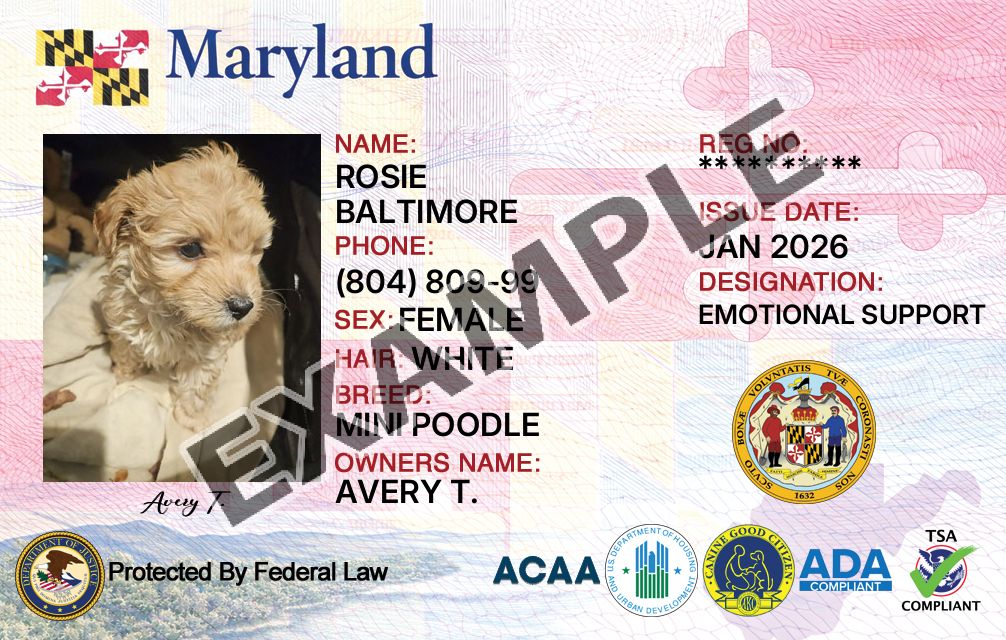
State Licensed, Service Dogs and Emotional Support Dogs in Maryland
If you’re asking where do I register my dog in Maryland for my service dog or emotional support dog, the key point is this: Maryland does not have a single statewide “service dog registration” or “ESA registration” office for the public. What most people actually need is a dog license in Maryland (sometimes called an animal control dog license Maryland residents obtain through local government), which is typically issued by your county or city animal services/licensing office.
This page explains where to register a dog in Maryland for licensing purposes, how local licensing works, what you’ll need (including rabies vaccination proof), and how licensing differs from a dog’s service dog legal status or an emotional support animal (ESA) housing accommodation.
Where to Register or License Your Dog in Maryland
Because dog licensing in Maryland is usually handled locally, start with the animal services, animal control, or licensing office for the county (or city) where you live. The offices below are examples of official local government locations that publish licensing information and handle licensing, animal control, and/or rabies enforcement.
Prince George’s County Animal Services Division (Licensing Section)
Address:
3750 Brown Station Road
Upper Marlboro, MD 20772
Phone: 301-780-7200 (option 8)
Fax: 301-780-7258
Office hours:
Not listed on the licensing page (call to confirm walk-in/mail-in options and hours).
Montgomery County Animal Services & Adoption Center (Office of Animal Services)
Address:
7315 Muncaster Mill Rd.
Derwood, MD 20855
Phone: 240-773-5900
Email (Pet Licensing): [email protected]
Office hours:
Monday: 12:00 PM – 7:00 PM
Tuesday: 12:00 PM – 7:00 PM
Wednesday: 12:00 PM – 5:00 PM
Thursday: 12:00 PM – 7:00 PM
Friday: 12:00 PM – 7:00 PM
Saturday: 11:00 AM – 5:00 PM
Sunday: 11:00 AM – 5:00 PM
Anne Arundel County Animal Services
Address:
411 Maxwell Frye Road
Millersville, MD 21108
Phone: (410) 222-8900
Administrative hours (licensing-related):
Monday: Closed
Tuesday: 10:00 AM – 3:00 PM
Wednesday: 10:00 AM – 6:00 PM
Thursday: 10:00 AM – 3:00 PM
Friday: 10:00 AM – 3:00 PM
Saturday: 10:00 AM – 3:00 PM
Sunday: Closed
Baltimore County (Miscellaneous Permits & Licenses) — Animal License
Address: Not listed on the animal license page (use the county’s published process for online/mail/in-person instructions).
Office hours: Not listed on the animal license page (check the county’s permitting office contact details for current hours).
Frederick County Animal Control — Rabies & Licensing
Address: Not listed on the Rabies & Licensing page (instructions reference mailing an application to the Animal Control Center).
Phone (bite reports / animal control investigations): 301-600-1544
Office hours: Not listed on the Rabies & Licensing page (call to confirm licensing-tag purchase options and hours).
If your county isn’t listed above, search your local government site for terms like “animal services,” “animal control,” “dog licensing,” or “rabies & licensing.” In Maryland, those local offices are typically the primary agencies responsible for licensing compliance and many rabies-related enforcement steps (such as bite reporting coordination).
Overview of Dog Licensing in Maryland
Who issues a dog license in Maryland?
In practice, a dog license in Maryland is usually issued by the county (or a city with its own program) where the dog lives. That’s why the most accurate answer to where to register a dog in Maryland is: your local animal services / animal control / licensing office. These local programs are the ones that typically sell tags, process renewals, and set local deadlines, fees, and enforcement steps.
What licensing is (and is not)
A license is typically a local registration/tag tied to basic public-health and animal-control requirements—most importantly, proof of current rabies vaccination. A license is not a disability accommodation record, and it is not a legal certification that a dog is a service animal.
Why counties care about licensing
Local licensing helps counties:
- confirm rabies vaccination compliance and support rabies control efforts,
- return lost dogs to owners faster,
- fund animal services operations, and
- enforce local animal control ordinances (leash laws, nuisance rules, and more).
How Dog Licensing Works Locally in Maryland
Step 1: Confirm your local rules (county/city)
Start with your county or city animal services website or office. Requirements can differ by jurisdiction, including: the age when a dog must be licensed, how soon after moving you must obtain a license, license term options, and whether discounts apply for altered dogs or seniors. For example, Baltimore County describes annual licensing for dogs and cats four months and older kept in the county for longer than 30 days per year, and it notes that service dog licenses may require special handling (not completed online).
Step 2: Get (and keep) rabies vaccination current
Maryland regulations require owners/custodians to have dogs, cats, and ferrets vaccinated against rabies by 4 months old and to obtain proper rabies vaccination documentation (a certificate) completed by a Maryland-licensed veterinarian (or authorized clinic process). Local licensing offices commonly require you to submit a copy of that rabies certificate to issue or renew a license tag.
Step 3: Apply online, by mail, or in person (varies)
Many counties offer online licensing, but some licenses (including some service-dog related license options) may require mail or in-person processing depending on the jurisdiction. Prince George’s County, for instance, lists a walk-in/mail-in licensing section and additional walk-in only locations within the county for purchasing licenses. Anne Arundel County publishes options that include purchasing licenses online and also provides administrative hours for licensing-related services.
Step 4: Keep your tag and records accessible
After approval, your local office typically issues a license tag. Keep your rabies certificate and licensing receipt in a safe place. If animal control needs to confirm licensing or rabies status (for example, after a bite incident), having documentation available can speed up the process.
What if my dog is a service dog or ESA—do I still license?
In many places, yes: your dog may still need a local license even if it is a service dog or an emotional support animal. Some counties may offer fee exemptions or special categories for service animals, but the dog may still need to meet core public-health requirements (including rabies vaccination) and local licensing rules. Ask your local office directly whether your jurisdiction offers an exemption, discount, or a specific “service animal” license type and what proof (if any) they require for that local licensing category.
Service Dog Laws in Maryland
What makes a dog a service dog (public access)
Under the Americans with Disabilities Act (ADA), a service animal is a dog that is individually trained to do work or perform tasks for a person with a disability. The task(s) must be directly related to the person’s disability. The ADA also explains that service animals are not required to be certified, professionally trained, or registered, and they do not have to wear a vest or special ID.
There is no official “ADA registration” you must buy
If you see ads promising “official service dog registration,” “national registry,” or paid certification for public access, be careful. For ADA public-access rights, the key is training and task work, not paperwork. Businesses and state/local government facilities generally may ask only two questions when it is not obvious a dog is a service animal: (1) whether the dog is a service animal required because of a disability, and (2) what work or task the dog has been trained to perform. They are not allowed to require documentation that the dog is registered, licensed, or certified as a service animal.
How this connects to licensing in Maryland
Even when a dog is a legitimate service dog under the ADA, local licensing is a separate process. A local animal control dog license Maryland residents obtain is about public health and local ordinance compliance (often including rabies). Service dog status is about disability access rights and task training.
Emotional Support Animal Rules in Maryland
ESAs are different from service dogs
An emotional support animal (ESA) generally provides comfort by being with a person. Under the ADA, that kind of comfort alone is not considered a trained task, so ESAs do not receive the same public-access rights as service dogs under the ADA. That’s why “registering” an ESA for public access is usually a misunderstanding of how the law works.
Where ESAs matter most: housing (and sometimes other limited contexts)
ESAs are most commonly handled in the context of housing accommodations (for example, a request to keep an animal in housing with a no-pets policy). Those housing rules are different from ADA public-access rules. If you’re trying to comply with Maryland dog licensing at the same time, treat these as two parallel tracks: (1) your local dog license/rabies compliance, and (2) a separate housing accommodation request process if applicable.
What to avoid
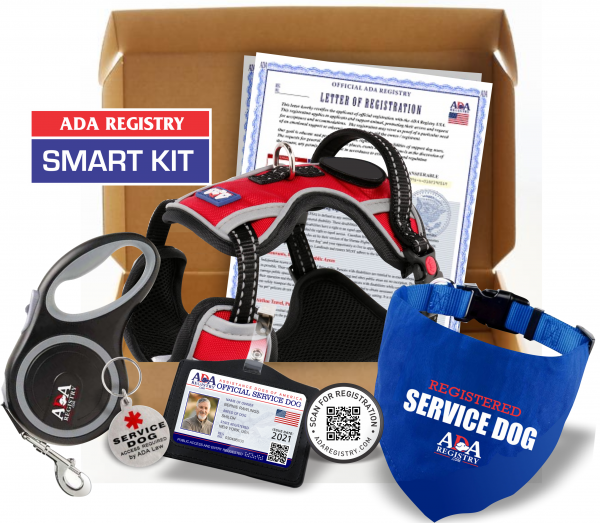
Avoid paying for third-party “ESA registrations” or “service dog certifications” that claim to create legal status. Local government licensing offices generally do not require those paid registries for licensing, and ADA public-access service dog status does not depend on buying a registration.
Frequently Asked Questions
For licensing, register locally: contact your county/city animal services, animal control, or licensing office to obtain a dog license in Maryland. For service dog or ESA status, there is generally no single Maryland “registration” office that grants ADA public-access rights. Service dog status is based on task training; ESA status is usually relevant to housing accommodation processes.
In most counties, yes. Maryland regulations require rabies vaccination for dogs by 4 months of age, and local licensing programs commonly require a copy of a valid rabies certificate to issue or renew a license.
No. A dog license in Maryland is a local government license/tag tied to local rules and rabies compliance. A service dog under the ADA is defined by being trained to perform tasks related to a disability, and the ADA does not require certification or registration for public access.
Not under the ADA. The ADA states that emotional support or comfort animals are not service animals when their role is comfort alone. ESAs are usually relevant to housing accommodations rather than public access.
Start with your new county/city animal services office. Local rules often include a deadline for obtaining a license after establishing residency. If you’re unsure which office is responsible, call your county government main line and ask for animal control or pet licensing.
What You May Need
- rabies vaccination proof
- identification
- proof of residency
- licensing fee
Quick Clarity: License vs. Service Dog vs. ESA
Local dog license (Maryland counties/cities)
A local government license/tag tied to animal control rules and rabies compliance. This is the usual answer to where to register a dog in Maryland.
Service dog (ADA public access)
A dog trained to perform specific tasks related to a disability. The ADA does not require a registry, certification, or vest.
Emotional support animal (ESA)
Typically relevant to housing accommodations; not the same as a service dog for public access under the ADA.
Register A Dog In Other Maryland Counties
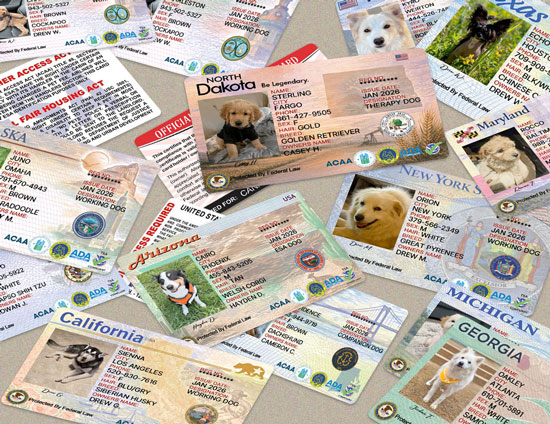
Select your county from the dropdown below to get started with your dog’s ID card. Requirements and license designs may vary by county, so choose your location to see the correct options and complete your pup’s registration.
- Allegany County Dog Registration
- Anne Arundel County Dog Registration
- Calvert County Dog Registration
- Caroline County Dog Registration
- Carroll County Dog Registration
- Cecil County Dog Registration
- Charles County Dog Registration
- Dorchester County Dog Registration
- Frederick County Dog Registration
- Garrett County Dog Registration
- Harford County Dog Registration
- Howard County Dog Registration
- Kent County Dog Registration
- Montgomery County Dog Registration
- Prince George’s County Dog Registration
- Queen Anne’s County Dog Registration
- Somerset County Dog Registration
- St. Mary’s County Dog Registration
- Talbot County Dog Registration
- Washington County Dog Registration
- Wicomico County Dog Registration
- Worcester County Dog Registration